



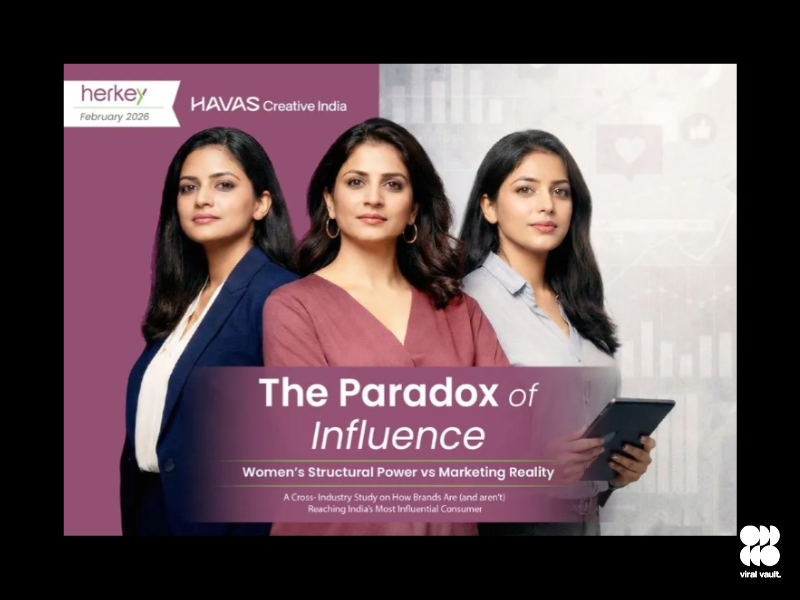
A new report by HerKey in partnership with Havas Creative India highlights a striking disconnect between women’s growing purchasing power and the way brands approach women-focused marketing.
Titled “The Paradox of Influence: Women’s Structural Power vs Marketing Reality,” the study reveals that women influence between 70% and 85% of purchase decisions across consumer categories. Despite this significant influence, many brands have yet to fully integrate women-centric strategies into their core marketing frameworks.
The report draws insights from senior marketing leaders across sectors including FMCG, retail, fashion, BFSI, healthcare, automotive and personal care. The research combines survey responses, interviews and secondary industry analysis to understand how brands are evolving their approach toward women consumers.
According to the findings, 79% of marketers believe women’s influence on purchasing decisions has increased in the past two years. However, only 14% of organisations consider themselves leaders in women-focused marketing, indicating a major gap between recognition and execution.
Sector-wise differences were also observed. Categories traditionally associated with women, such as fashion and personal care, run women-focused campaigns more frequently, with 50–70% of brands actively targeting women audiences. In contrast, sectors like automotive, BFSI and real estate-where women’s financial and purchasing influence is rising-still treat such campaigns as limited or experimental.
One of the key barriers identified is the lack of deep consumer insight. Data gaps, outdated assumptions and limited qualitative research continue to shape how brands communicate with women.
The report also notes that nearly one-third of brands still portray women primarily as caregivers in advertising, despite growing awareness among marketers that such portrayals can be restrictive.
Looking ahead, marketers are exploring community-led engagement, AI-driven personalisation and region-specific storytelling as ways to better connect with women consumers.