



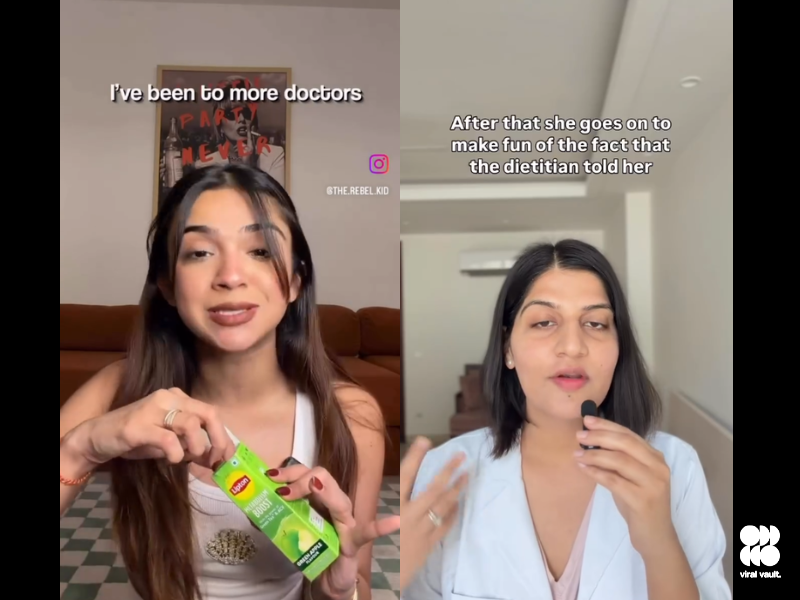
A now-deleted video by influencer Apoorva Mukhija has sparked widespread criticism after appearing to link Lipton’s metabolism tablets to the treatment of PCOD and PCOS-hormonal conditions that typically require medical guidance and structured lifestyle changes.
Video Link: https://www.instagram.com/reel/DWlwnikEpZl/?utm_source=ig_web_copy_link&igsh=MzRlODBiNWFlZA==
In the video, Mukhija spoke about her personal experience with PCOD, referencing a doctor’s advice around exercise, sleep, and diet. However, the narrative shifted when she suggested that Lipton’s metabolism-focused tablets could serve as an easier alternative. This implication quickly raised concerns, with viewers questioning the accuracy and responsibility of promoting over-the-counter supplements in place of medically advised care.
Health experts consistently emphasise that PCOD and PCOS are complex conditions that cannot be addressed through quick fixes. Suggesting otherwise, even indirectly, risks oversimplifying a serious health issue and potentially misleading audiences who may already be seeking easy solutions.
The timing of the controversy is significant, as Lipton is actively running influencer-led campaigns around its wellness portfolio. While many creators have approached the messaging with caution, this instance stood out for its tone and lack of nuance.
Following backlash in the comments, the video was taken down. However, the incident has reignited an important conversation around influencer accountability-especially in health-related content.
As influencer marketing continues to shape consumer decisions, this episode underscores a critical truth: relatability can drive engagement, but responsibility builds trust.