



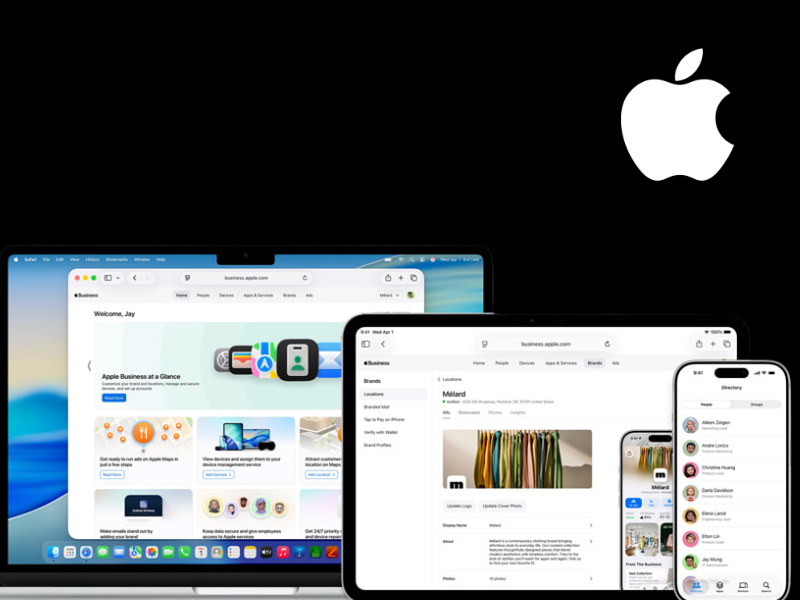
Apple is stepping deeper into the enterprise ecosystem with the launch of Apple Business, a unified platform designed to help companies manage operations, empower employees, and connect with customers-all within Apple’s ecosystem. The platform is set to roll out globally on April 14 across 200+ countries and regions.
At its core, Apple Business simplifies device management with built-in mobile device management (MDM). Businesses can control devices, apps, settings, and employee groups from a single dashboard. Features like “Blueprints” and zero-touch deployment ensure that devices are pre-configured and ready to use straight out of the box-reducing IT complexity at scale.
On the collaboration front, Apple integrates essential tools like email, calendar, and company directories, enabling businesses to build a professional digital identity. Managed Apple Accounts ensure a clear separation between work and personal data, while a dedicated companion app allows employees to access apps, directories, and support seamlessly.
But Apple isn’t stopping at internal operations-it’s also targeting customer engagement. Businesses can now manage how they appear across Apple services like Maps, Wallet, and Mail, using brand profiles, custom place cards, and actionable listings (like bookings or orders). Notably, Apple is introducing Maps advertising in the US and Canada, allowing brands to appear in search results with privacy-first ad formats.
With Apple Business, the company is positioning itself as more than just a hardware provider-it’s building an end-to-end enterprise ecosystem.
In a world dominated by fragmented tools, Apple is offering something simple: one platform to run your entire business.