



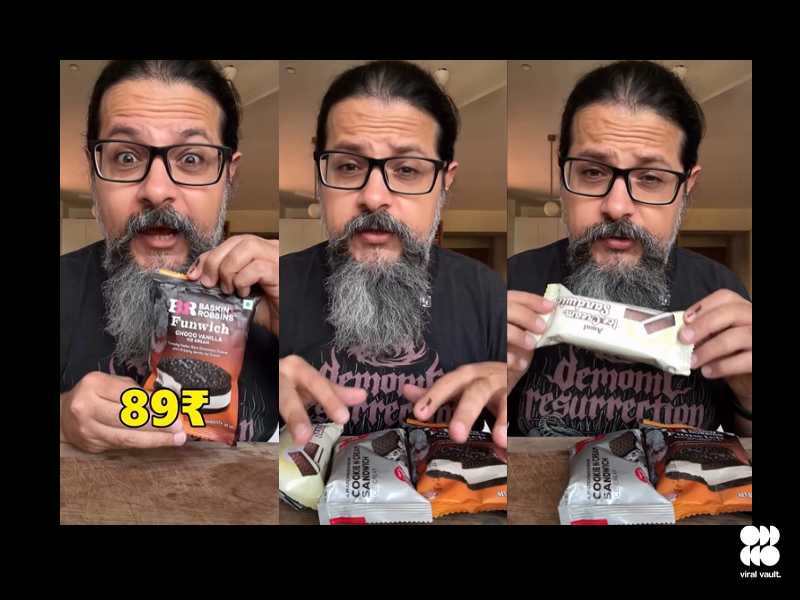
Baskin Robbins has publicly raised concerns about ice cream storage practices on quick-commerce platform Zepto after one of its ice cream sandwiches appeared misshapen in a review video by popular food creator Headbanger Eats. The brand’s response, posted in the comments section of the video, marked a rare instance of a legacy food brand openly calling out a delivery partner over cold-chain handling.
Video Link: https://www.instagram.com/reel/DTt5xpuCtBo/?utm_source=ig_web_copy_link&igsh=MzRlODBiNWFlZA==
In its comment, Baskin Robbins suggested that the distorted appearance of the product was likely the result of improper storage and stated that it would take up the issue with Zepto. While the brand did not clarify whether the incident was isolated or part of a broader concern, the public nature of the response drew significant attention within the food and commerce ecosystem.
The video in question featured Headbanger Eats reviewing ice cream sandwiches ordered via Zepto from multiple brands, including Amul, Havmor, and Baskin Robbins. Each product was unboxed on camera and assessed for appearance, texture, and taste. Although the creator did not explicitly criticize Baskin Robbins, viewers noticed that its sandwich appeared visibly out of shape, unlike competing products. None of the other brands featured in the video responded publicly.
What makes the episode noteworthy is Baskin Robbins’ decision to address the issue openly. Typically, storage and cold-chain lapses are resolved privately between brands and platforms, given the growing reliance on quick-commerce for impulse-driven food sales. The move signals increasing sensitivity among premium brands about how product quality is represented at the point of delivery.
At the time of writing, Zepto had not issued a public response. Industry guidelines recommend ice cream be stored at –18°C or lower, as even brief temperature fluctuations can cause melting and refreezing, leading to visible damage. As quick commerce becomes a major discovery channel, maintaining cold-chain consistency is emerging as a reputational imperative-not just a logistical one.