


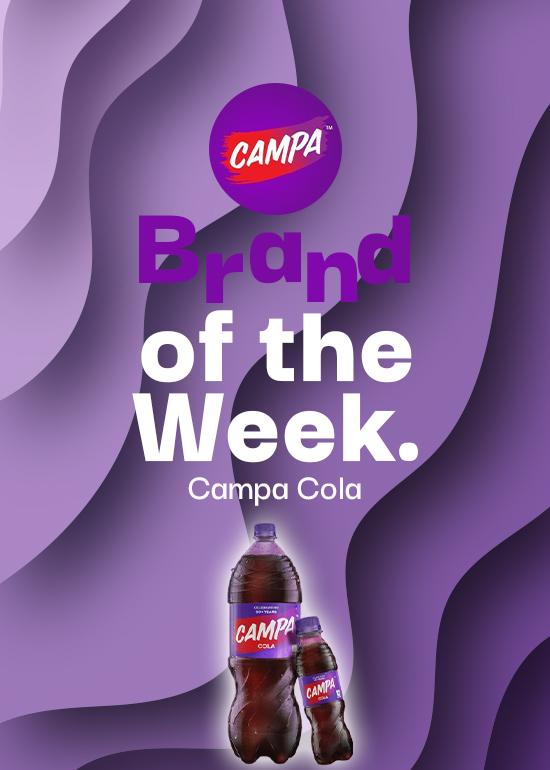
India has always had a complicated relationship with cola. And Campa Cola sits right at the heart of that story.
Link: https://www.instagram.com/p/DYmSR0YmVWw/?utm_source=ig_web_copy_link&igsh=MzRlODBiNWFlZA==
Born in 1977, Campa Cola didn’t just enter the market – it inherited one. When Coca-Cola exited India rather than dilute its equity stake under foreign exchange regulations, Campa stepped into the vacuum and made it its own. For over a decade, its three variants – Cola, Orange and Lemon – were the taste of Indian summers. “The Great Indian Taste” wasn’t just a tagline. It was a quiet act of national pride.
Then 1991 arrived. Liberalisation threw the doors open and Coca-Cola and Pepsi returned with celebrity budgets, aggressive distribution and modern packaging. Campa, outgunned on every front, slowly disappeared – not with a bang, but with a whimper.
The second chapter, however, is significantly louder.
Reliance acquired the Campa brand in 2022 and relaunched it nationally in 2023 – entering not as another brand challenger, but as a systems challenger. The strategy was surgical: a 200ml bottle priced at ₹10 – half of rivals’ packs – targeting price-sensitive rural and Tier 2 and 3 markets. The results were remarkable. Campa hit ₹1,000 crore revenue within 18 months of relaunch, achieving 7% national market share – up from 2% in 2024 – with 14% in key cities.
Reliance is now planning an investment of up to ₹8,000 crore to scale Campa and set up 10–12 new manufacturing units nationwide.
This was never just about nostalgia. It was always about architecture – distribution, pricing and scale as weapons. Campa Cola isn’t rewriting a brand story. It’s rewriting the rules of Indian FMCG competition entirely.