


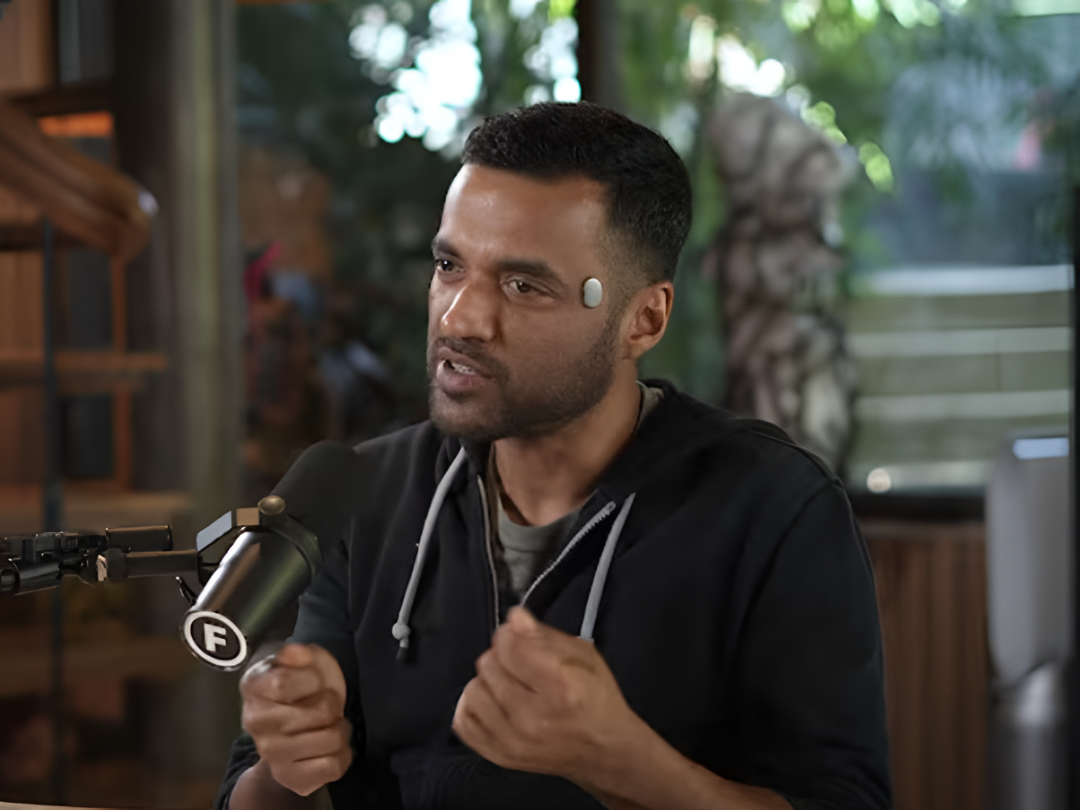
Would you spend ₹85,000 on a device that claims to offer a window into your brain? Deepinder Goyal is betting some people will. Temple, the Zomato founder’s latest venture, is a wearable that moves beyond fitness tracking to monitor signals linked to brain blood flow and physiological strain.
Worn against the side of the head, Temple uses optical sensors to track changes in cerebral blood circulation through a metric called BrainFlow. Its Entropy score, ranging from 1 to 250, reflects the body’s strain in response to sleep, exercise, stress and caffeine, while a Momentum score brings baseline and threshold readings together.
The ambition is to help users understand how their bodies respond to everyday activities and recovery, drawing on Goyal’s Gravity Ageing Hypothesis, which explores whether gravity’s effect on blood circulation could influence ageing and cognitive decline. Indian pre-orders opened on November 1 at ₹85,000, with a made-to-order model and lifetime app access. Its scientific credibility, however, remains under scrutiny. Doctors and commentators have questioned whether its brain claims have independent validation. Temple is positioned for wellness and research, not medical diagnosis.
For marketers, the lesson is bigger: a founder’s reputation can generate attention, and premium positioning can create intrigue. But when a brand promises access to something as complex as the human brain, attention is only the beginning. Trust will depend on whether the technology delivers what it promises.