



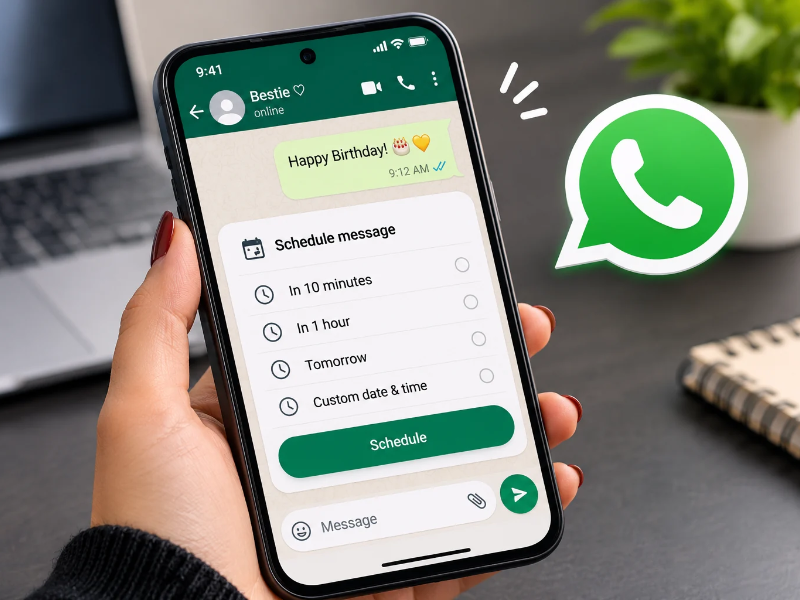
WhatsApp has long been about instant messaging, which is what makes Scheduled Messages such a notable shift. The feature lets users set a message to send automatically anywhere between 10 minutes and 14 days in advance. For the first time, the app lets people decide when a message lands, not just what it says.
The execution keeps it practical. It works across individual and group chats and supports text, photos and videos. Users type their message, press and hold the Send button, pick a date and time, and confirm. Messages stay end-to-end encrypted and still go out even if the sender’s phone is off or offline. Upcoming messages can be viewed and deleted before they send. The rollout is global over the coming weeks, so it may not appear on every account right away.
The update also arrives alongside a wider set of changes. WhatsApp Web now supports one-on-one and group audio and video calls, and active calls can move across devices. Call waiting rooms, faster HD video and noise suppression sit next to usernames, which let people connect without sharing their phone number. Groups gain @all mentions, timed polls, hidden poll votes and quick creation of similar groups.
What sets scheduling apart is its reach. It touches personal chats, workplace groups and community conversations at once. For users juggling reminders and wishes, and for brands and creators managing busy communities, the ability to plan communication ahead could be the update that changes daily habits the most.