



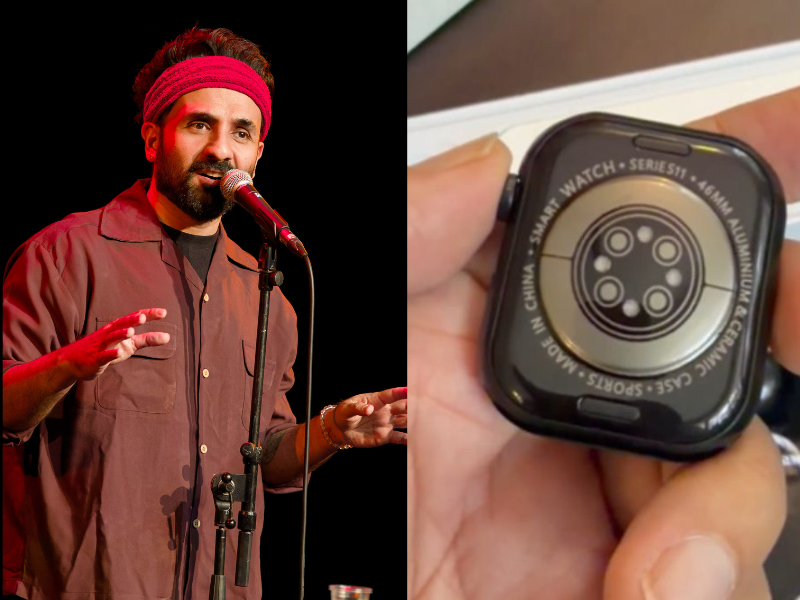
Quick commerce has cracked the code on speed, but a recent episode involving comedian-actor Vir Das has reignited questions about whether trust can keep pace as platforms push into premium electronics. Zepto found itself at the centre of this debate after replacing an Apple Watch that Das alleged was a counterfeit.
Das claimed he received a Chinese knock-off instead of an authentic Apple Watch after ordering the device, priced at roughly Rs 50,000, on Zepto ahead of an urgent shoot. Sharing videos on Instagram and X, he pointed to the packaging, which read “Designed by Watch in China” rather than carrying Apple’s genuine branding. He also noted that Zepto’s customer service had initially said nothing could be done, calling the experience a “full scam.”
The post struck a nerve online, with users flagging similar mishaps while ordering electronics through quick-commerce apps. As the story gained momentum, Zepto stepped in, delivering a genuine Apple Watch to Das. The comedian later confirmed the resolution, going out of his way to clarify that the delivery executive was not at fault, noting the package hadn’t appeared sealed and that he’d been advised to file a complaint.
Zepto stated that it had initiated a reverse pickup, calling it standard procedure for investigating such complaints, and reiterated that an OTP-based verification system exists for high-value deliveries, urging customers to confirm sealed packaging before sharing the code.
While the immediate issue is settled, Zepto is yet to explain how the counterfeit item made it into the supply chain in the first place — leaving the bigger question of quality control in fast-growing premium categories still open.