


Over the past year, India’s largest FMCG players have moved AI from isolated pilots into the core of their marketing operations, using it to power decisions rather than just create content. Several have built proprietary AI platforms rather than relying solely on third-party tools, signalling a long-term shift in capability rather than a passing trend.
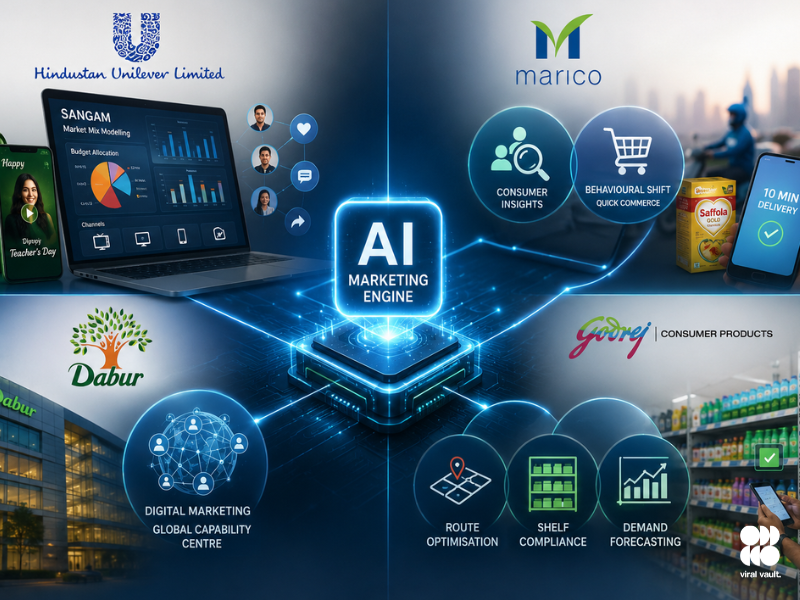
HUL’s in-house platform, Sangam, uses market-mix modelling to analyse consumer, media and business data before recommending how advertising budgets should be allocated across channels. The brand’s own AI-generated Amla campaign for Teacher’s Day paired a fully AI-created video with a personalised microsite, amplified through a network of nano creators.
GCPL’s AI ecosystem powers route optimisation for over 3,000 sales representatives serving more than a million retail outlets, while image-recognition tools check whether products are displayed correctly on shelves. Its machine-learning models also factor in seasonality, weather and competitive activity to sharpen demand forecasting.
Marico is using AI primarily to speed up consumer insight generation, while treating quick commerce as a behavioural shift rather than just another sales channel. Dabur, meanwhile, is setting up a Digital Marketing Global Capability Centre alongside its existing IT GCC, aimed at connecting marketing technology with wider business operations for more agile, data-led execution.
Across all four companies, the shared goal isn’t AI-made advertising – it’s AI-informed decision-making, from budget allocation to shelf-level execution, marking a structural shift in how India’s FMCG giants build and scale their brands.