



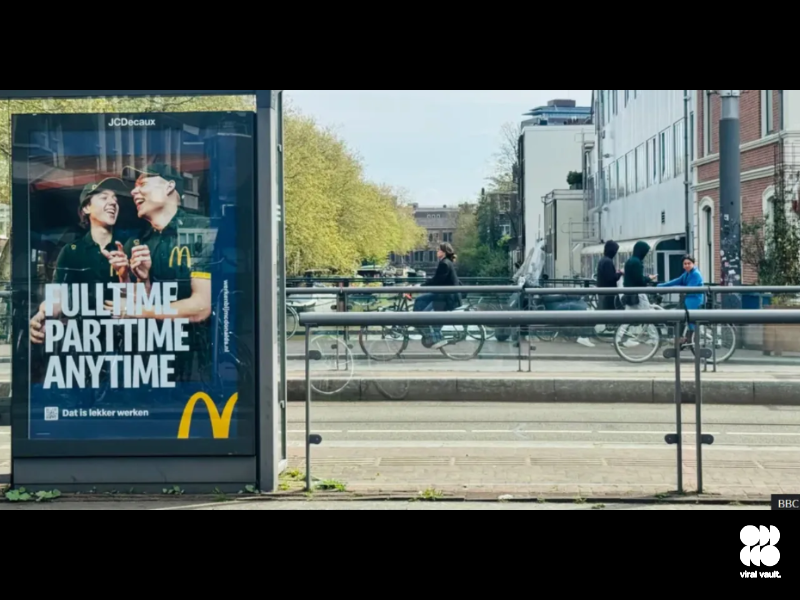
Amsterdam has become the world’s first capital city to ban public advertisements for meat and fossil fuel products, marking a major shift in how cities connect climate goals with advertising policy. Since May 1, ads promoting burgers, petrol-powered cars, and airline travel have been removed from billboards, tram shelters, and metro stations across the Dutch capital.
The decision supports Amsterdam’s long-term environmental ambitions, including becoming carbon neutral by 2050 and reducing local meat consumption by half during the same period. City leaders believe public spaces should reflect sustainability commitments rather than promote products linked to high carbon emissions.
The initiative was led by Anke Bakker of the Party for the Animals, who defended the move by saying the aim is not to control personal choices, but to reduce constant commercial pressure from large companies influencing consumer habits. Leaders from GreenLeft also backed the measure, arguing that climate leadership loses credibility when public infrastructure continues displaying environmentally harmful promotions.
The ban is particularly notable because it places meat advertising alongside fossil fuel products, framing food consumption as part of the climate conversation. While meat represented just 0.1% of Amsterdam’s outdoor ad market and fossil fuel-related promotions accounted for around 4%, the symbolic impact is significant.
Industry groups have criticised the decision as an unfair restriction on commercial freedom. However, researchers view it as a valuable experiment in changing social norms. Studies, including evidence from London Underground, suggest limiting exposure to certain ads can influence purchasing behaviour.
Amsterdam now joins cities like Edinburgh and Stockholm in reshaping public advertising for a greener future.