



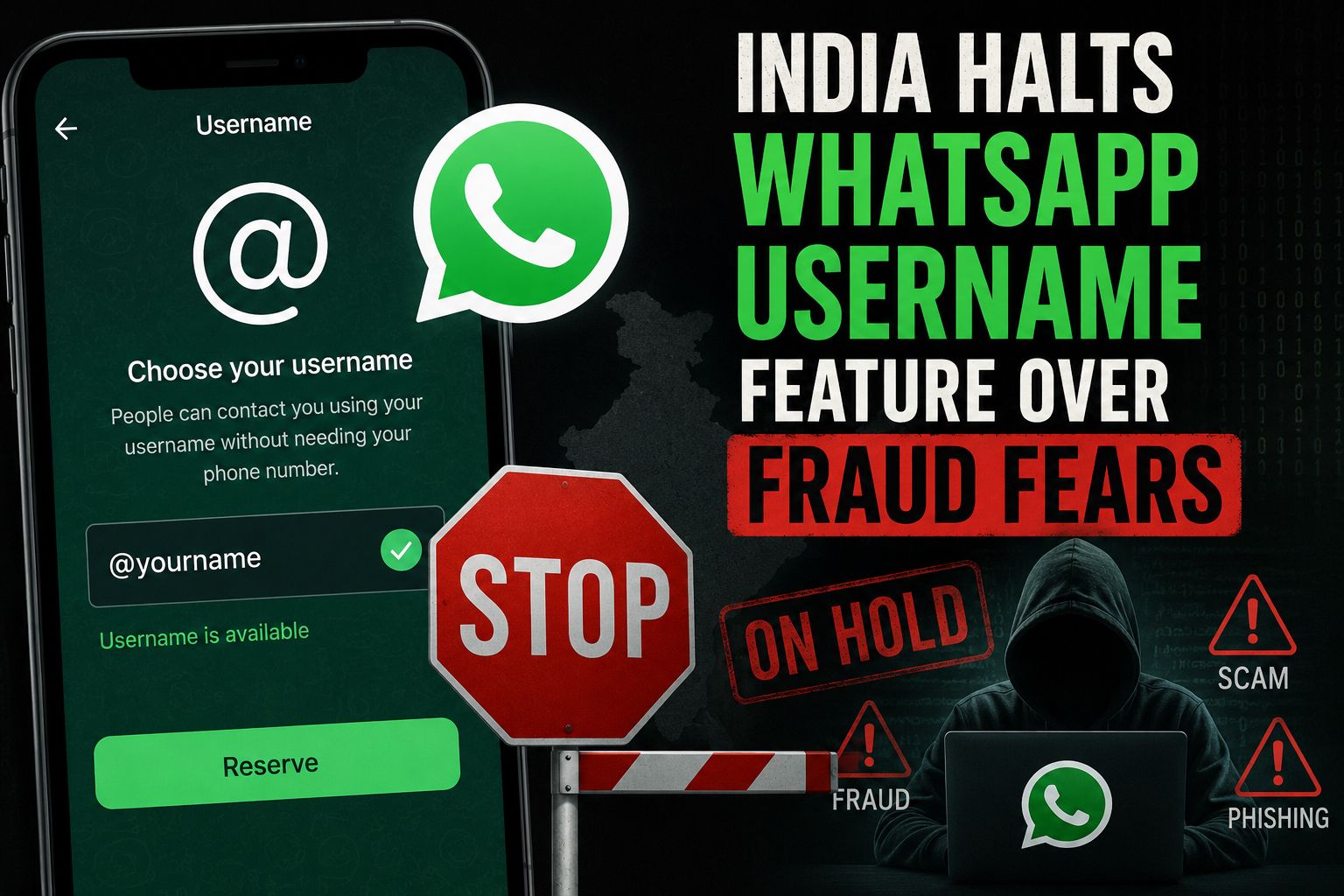
India’s IT ministry has directed Meta to explain, within three days, why regulatory action shouldn’t be taken against WhatsApp’s planned “usernames” feature, according to a government letter reviewed by Reuters. The ministry has ordered the rollout paused in the country until formal consultations are complete.
The feature would let users reserve unique usernames and start conversations without revealing their phone numbers. A Meta spokesperson told Reuters the feature isn’t live yet, and that usernames for public figures, government entities and verified accounts have already been reserved to prevent impersonation. The government, however, remains unconvinced.
The IT ministry’s concern centers on fraud risk – warning that the feature could meaningfully increase phishing, digital arrest scams, and impersonation attacks by letting bad actors approach victims while staying anonymous. Officials are particularly worried about usernames mimicking banks, individuals or government bodies, which could enable large-scale identity spoofing.
This isn’t an isolated move. It follows closely on Reuters’ reporting that India had already scrutinized Telegram over similar phone-number-masking anonymity features. A June Home Ministry report, also reviewed by Reuters, flagged that such privacy tools make identity tracing extremely difficult for law enforcement, enabling both cyber fraud and the spread of illegal content. Telegram recently lost a legal challenge against a temporary Indian ban after the government successfully argued that username-based interactions create serious enforcement gaps.
The message to platforms is clear: anonymity features are now facing real regulatory friction in India.