


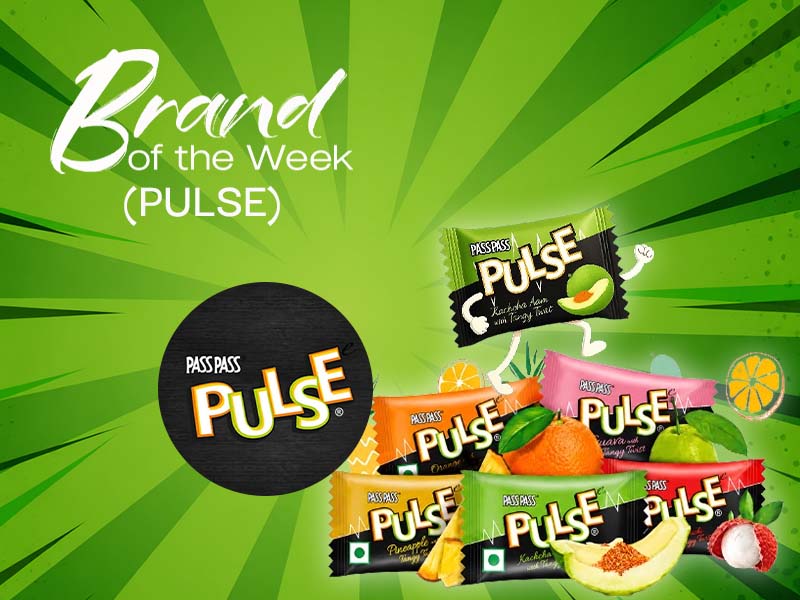
Pulse candy’s rise is one of Indian FMCG’s most unlikely success stories – built without celebrity endorsements or a big-ticket ad campaign, and driven almost entirely by word-of-mouth.
Before launching, DS Group spent two years (2013–2015) on R&D and discovered that raw mango dominated nearly 50% of the hard-boiled candy market, yet no brand had made the flavour truly memorable. Their answer was a three-stage taste experience – a tangy raw mango opening, a salty masala core, and a sweet finish – designed to counter “sensory-specific satiety,” the reason most candies feel repetitive by the third bite.
The bigger gamble was pricing. With 86% of the market locked at 50 paise, Pulse launched at ₹1, offering double the price and double the grammage. The bet paid off fast: ₹50 crore in six months, ₹100 crore in eight – without a formal ad campaign.
Distribution played a key role too. Leveraging DS Group’s existing network of 8.5 lakh retail outlets and 2,500+ distributors, Pulse found its perfect shelf: pan shops, where smokers buying candies in bulk turned it into a daily ritual.
What followed was a string of culturally sharp campaigns – from a traffic-signal stunt synced to candy flavours to viral moments like a creator melting Pulse into Maggi in 2026 that racked up lakhs of views organically.
From ₹100 crore in eight months to ₹750 crore today, with a footprint now extending to the UAE, UK and Singapore, Pulse’s story proves one thing: sometimes a single sharp insight beats an entire ad budget.